Showing posts with label Kenneth Williams. Show all posts

Thursday, 31 August 2017

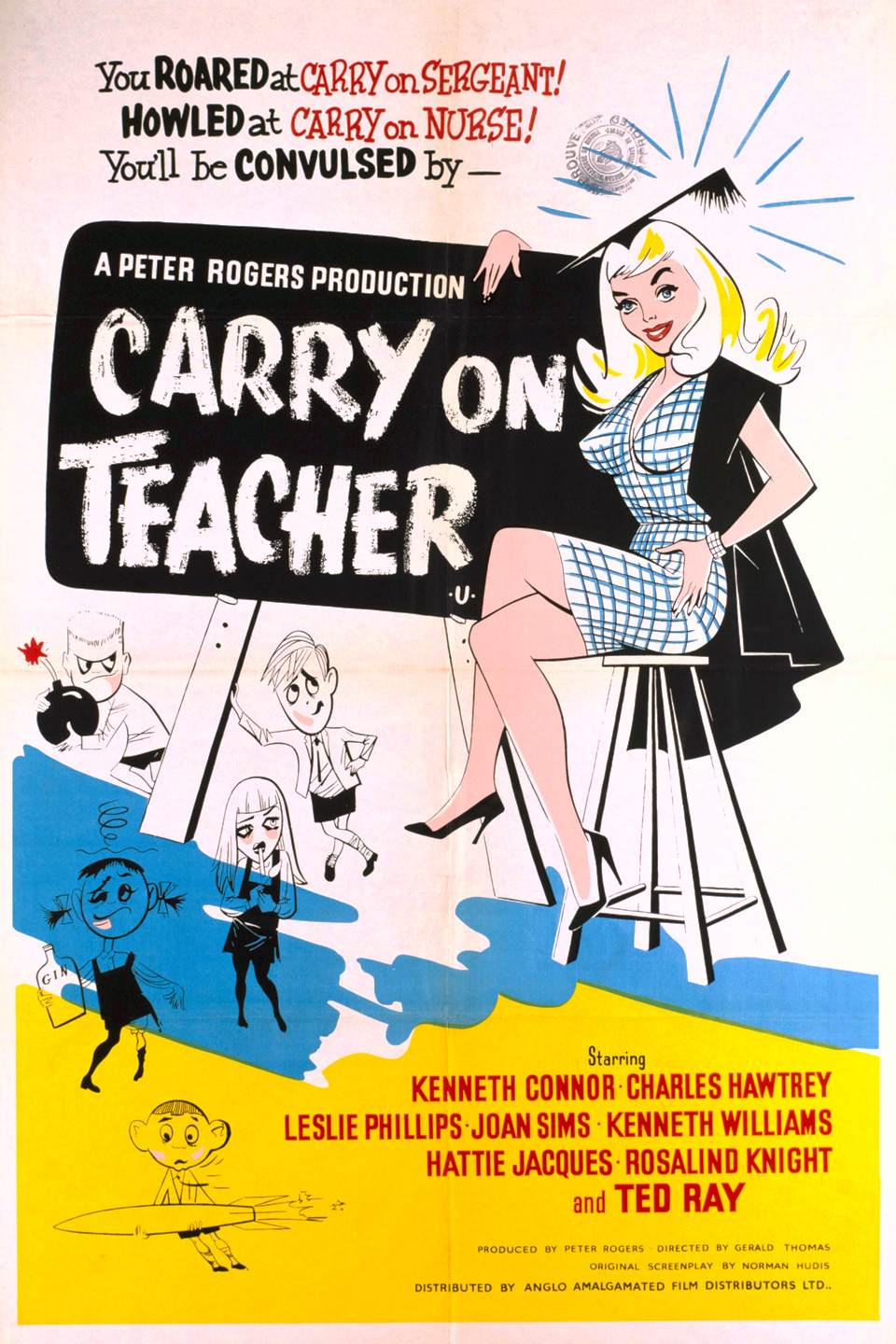
Carry On Teacher (1959)


Being only the third in the series, Carry On Teacher lacks a few of the elements associated with the films, but we can already see a rough blueprint of how they will develop.

William Wakefield (played by Ted Ray, in his only Carry On film) is the Headmaster of Maudlin Street Secondary Modern School. His hopes of getting a job at a shiny new school rest entirely on the results of a visit by Government Inspector Miss Wheeler, and noted child psychiatrist Alistair Grigg (Leslie Phillips). However, the pupils don't want Wakefield to leave, and plot to sabotage the inspection by any means necessary.

Several actors would go on to be Carry On regulars and here seem to be rehearsing the roles they would play on a more regular basis, with Kenneth Connor as an affable duffer, Charles Hawtrey as a camp neurotic, and Joan Sims as Sarah Allcock, the object of male desire. The exception is Kenneth Williams, playing straight as Edwin Milton, the English teacher, very different from the leering grotesque persona of the later films. (Look also for a very young Richard O'Sullivan, of later Man About the House fame)

Being a Carry On film, some of the script revolves around sex, particularly Grigg chasing after Allcock, and the innuendo in her name does not go unnoticed. However, this is rather tame and anodyne, lacking the bawdy energy that the likes of Sid James would bring into later films of the series.

In fact, the world of Carry On Teacher is an uncomplicated, sometimes sentimental one, but modern viewers might find one aspect jarring. Corporal punishment is a recurring theme, particularly the reluctance of Wakefield to administer it, and is a reminder of a time when British school children faced the possibility of physical punishment from their teachers.

Sunday, 17 July 2016

Carry On Behind (1975)


Carry On Behind (1975)

Despite still turning in a profit, the Carry On Films were facing something of a crisis by the mid-70s. Several of the regular stars had walked away from the series, along with the regular script writer, and many of the box office rivals such as the Confessions series were hoping the smut ante as well as including actual sex and nudity. While Carry on Behind is in some respects a reworking of the earlier Carry on Camping, the new cast members help stop it feeling like a straightforward re-tread.

There is little in the way of plot, and instead we get a series of situations and sketches involving the assorted characters at the Riverside Caravan Park. Firstly, there is uptight archaeology professor Roland Crump (Kenneth Williams), whose joy at the discovery of Roman artefacts during the digging of a cesspit at the park is ruined by having to expert share a caravan with fellow expert Professor Anna Vrooshka (Elke Sommer) while they investigate further. Then there is randy butcher Fred Ramsden (Windsor Davies) and his dopey and clumsy electrician mate Ernie Bragg (Jack Douglas), both hoping to wow the ladies while away from their wives Sylvia (Liz Fraser) and Vera (Patricia Franklin) at Riverside. Elsewhere there is Arthur Upmore (Bernard Bresslaw) and his wife Linda (Patsy Rowlands), whose dream of a nice break away together is scuppered by the presence of Linda’s mother Daphne (Joan Sims), the lecherous campsite owner, Major Leaper (Kenneth Connor), and the camp site odd job man, Henry Barnes (Peter Butterworth), who bears a striking resemblance to Daphne’s estranged husband, Henry Barnes (Peter Butterworth).

Long-time Carry On screenwriter Talbot Rothwell had been forced to retire through ill health, so was replaced for this film by Dave Freeman, who had a long career in TV and film comedy, including the film version of hit TV sitcom Bless This House, starring Sid James. Not that you would notice the difference, with the usual blend of vignettes rather than story, groan inducing puns and innuendo, saucy seaside postcard humour and broad caricatures rather than characters.

This blend of the new and the familiar is perhaps the key to the film’s success. Kenneth Williams, Bernard Bresslaw, Peter Butterworth and Joan Sims were Carry On veterans, well versed in how to make the cheesiest of lines get a laugh. Of the newbies, Windsor Davies deserves praise for stepping into the character of the randy womaniser, the role usually filled by Sid James, and making it very much his own. The same can also be said for Jack Douglas, who brings his distinctive physical and verbal comedy style to the sidekick role usually filled by Bresslaw or Butterworth.

The real and very welcome surprise is Elke Sommer. She had made comedy films before, such as the Inspector Clouseau classic A Shot in the Dark, but the ribald and very English Carry On films are something else entirely. Nevertheless, she jumps in to the proceedings with aplomb and energy, the forceful and uninhibited Vrooshka acting as the perfect foil to Crump.

Wednesday, 18 March 2015

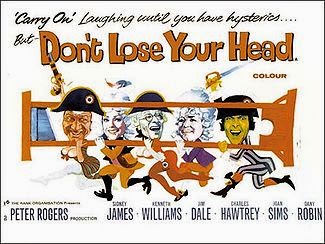
Carry On Don't Lose Your Head (1966)


The 13th in the venerable series of British comedy films, Carry On Don't Lose Your Head is an often funny but also often unremarkable effort, with good performances undermined by a few slow spots and a script that runs out of steam before the end.

Set in the time of the French Revolution, the plot spoofs the famous story of the Scarlet Pimpernel, with jaded layabout English noblemen, Sir Rodney Ffing (pronounced "Effing") and Lord Darcy Pue (Sid James and Jim Dale respectively), leading double lives saving French aristocrats from beheading at the guillotine, always leaving behind the mocking sign of the The Black Fingernail. But soon they find themselves crossing swords with head revolutionary Citizen Camembert (Kenneth Williams) and his sidekick, Citizen Bidet (Peter Butterworth), two Frenchmen who are so desperate to track down the Fingernail they are even prepared to travel to England.

Carry On films are never noted for their extravagant budgets and lavish sets, but this one looks great, with fancy costumes and country houses helping to recreate the tropes of the swashbuckling genre, in the same way that the previous film in the series, Carry On Screaming, did with Gothic horror.

Script wise, we get the usual wince inducing puns, and running jokes, this time based around lapses into schoolboy level French, and Sir Rodney’s surname. The other gags come thick and fast, and some do not work (there is a talking to camera sketch that goes on too long), but others hit the mark and the cast are more than capable of breathing life into the few other dry spells. 

Sometimes the story takes second place to a more sketch based approach, and there are caricatures rather than characters, with some broad acting to match, perfectly in keeping with the pantomime feel of the film. Almost stealing the show is Charles Hawtrey as sex-crazed aristocrat Duc de Pommfrit, one of those saved at the last minute from Madam Guillotine ("Your grace, there's an urgent letter for you!" "Oh, drop it in the basket, I'll read it later"). Sadly things run out of steam in the climactic sword fight which is not played for as many laughs as it should be and goes on too long.

There are also a few swipes at England, with gags about strikes and unions, not surprising given that it was released in the same year that saw a walkout by the National Union of Seamen lead to Harold Wilson’s government declaring a state of emergency.


Thursday, 26 February 2015

Carry On Girls (1973)


Carry On films often have a saucy seaside postcard sense of humour, so it is entirely appropriate to set one entirely at the seaside. Carry On Girls may lack the freshness (and several key cast members) of some of the earlier films, but it is still silly and enjoyable, albeit dated, fun.

Set in the fictional English seaside resort of Fircombe, the story sees local councillor and entrepreneur Sid Fiddler (played, naturally, by Sid James) plotting to use a beauty contest to boost business in the local area, a scheme that also involves his PR guru friend Peter Potter (Bernard Bresslaw), the dignity (and trousers) of the town mayor, Frederick Bumble (Kenneth Connor) and the seafront hotel run by his long suffering girlfriend Connie (Joan Sims). However, he has not counted on his arch rival, fellow councillor and head of the local Women's Lib, Augusta Prodworthy (June Whitfield) and her band of gender crusaders, who are prepared to use any means necessary to stop it.

Carry On Girls is the 25th film in the series, and some of the cast are showing their age a bit, in particular, Sid James, and the sight of him leching and chasing after young ladies gives some of the scenes a rather unsavoury atmosphere, albeit one entirely in keeping with the character of Fiddler.

Less enjoyable is the character of the Admiral played by Peter Butterworth, whose sole raison d'etre is to grope women and then look innocent when they complain, and playing sexual harassment for laughs, leaves a bit of a nasty taste in the mouth nowadays. Another cringeworthy aspect is Jimmy Logan playing the camp, lisping TV producer Cecil Gaybody (or, as Sid keeps calling him, “Mr Gayboy”), something which only goes to highlight how integral actors like Kenneth Williams and Charles Hawtrey were to the success of the series

However, before I start to sound too much like Mrs Prodworthy herself, there is still plenty to enjoy in the film. Firstly is the story, which, with the clearly defined opposing sides and the big climactic event, is pretty tightly structured, with little padding. Meanwhile, the cast, despite a few more wrinkles and grey hairs, carry of the most tired and lame puns and innuendoes with a great sense of energy and fun, especially the other series regulars such as Barbara Windsor, Patsy Rowlands and Jack Douglas.

What remains fascinating about Carry On films of the 1970s is the dark undertones, and unflattering picture they sometimes paint of England and its inhabitants. The opening shot of Carry On Girls is of a miserable looking family, sitting in the rain on the seafront pier, simmering with resentment and bitterness. The film ends with that classic horror movie trope, the angry mob, and one that is happy to revel in the misfortunes of others, but turn nasty in a second when similar things happen to them.

Carry On films often finish on a rather traditional happy ending, with the young hero marrying his sweetheart, but this is not the case here. Hounded by the baying mob, with his money stolen by his girlfriend (to offset the damage he has done to her business), Sid has no choice but to leap on a motorcycle and ride off into the sunset to an uncertain future with a buxom blonde.


Tuesday, 30 December 2014

Carry On Screaming (1966)


A raucous but affectionate spoof of Hammer and Universal horror films, Carry On Screaming is one of the funniest and best crafted of the long running British comedy series. Despite lacking some of the regular faces commonly associated with Carry On Films, their replacements more than rise to the occasion, and are joined by a few regulars, a script that doesn't abandon story for corny gags and an eye for detail in the production design.

The plot sees two Edwardian London policemen, Sergeant Sidney Bung (Harry H. Corbett of Steptoe and Son fame) and Constable Slobotham (Peter Butterworth) investigating the disappearance of several young women in a local wood. Could the disappearances have anything to with sinister scientist Dr Watt (Kenneth Williams), who has a lab full of mysterious equipment – and a lucrative sideline selling female mannequins to local department stores?

This is the twelfth entry in the series, so by now many of the tropes had been established, both the with characters (the henpecked lech Sid James, his harridan wife, his dopey sidekick, and an object of his lust and the script (innuendos, puns, and broad slapstick). There is no actual Sid James the actor, so the Sid James character is represented by Corbett, and he gives Bung a stoutness and sympathy that you might not have got from James the actor. Most of the back and forth banter between him and Butterworth feels like two men doing a music hall routine, but they know to milk the lines for laughs.

In the world of Carry On the usual object of the lust of Sid James is Barbara Windsor, but here it is the stunning Fenella Fielding, in a low cut red dress, the epitome of saucy goth beauty, her subtly naughty style making a good contrast to the histrionics of Kenneth Williams. Sadly Joan Sims, is rather wasted in the role of nagging wife Emily Bung, given little to do other than verbally and physically attack Sidney.

Aside from the people, Carry on Screaming, often looks and sounds as good as the films it is spoofing. It has the lush eerie score, cob web strewn haunted houses, and portentous dialogue. What is also noticeable and unexpected, at least for a Carry On film, is that it is often, if not scary, then at least creepy, with weird and almost unpleasant undertones that crop up from time to time. Williams actually makes Watt feel, at times, genuinely salacious and  unsavoury, with a hint of incestous flirting in the banter between him and Valeria.