Horror and Sci-Fi films old and new, weirdo trash, arthouse, forgotten gems, well loved classics, and I'm watching the original Dr Who from the beginning.
The Great Gabbo is one of the earliest appearances of the trope of the ventriloquist's dummy who becomes autonomous. But, despite a menacing turn by Erich Von Stroheim, any tension or creepiness fizzles out with a talky script and interminable padding from song and dance numbers.
"The Great Gabbo" (Stroheim), is a famous ventriloquist in a double act with his dummy "Otto", who can talk and sing while Gabbo himself smokes, drinks, eats and pulls flags from his mouth. Off stage, he is less popular, driving away his girlfriend and assistant Mary (Betty Compson) with a mix of megalomania, eccentric superstitions, and the inability to express any form of feeling or emotion without using Otto. This is not going to end well.
Stroheim has plenty of on-screen presence and it doesn't feel like playing an egoist with brutal streak is much of a stretch. The tone is that of humourless melodrama, although there is one hilarious scene in a restaurant with Otto the dummy entertaining the crowd while Gabbo eats dinner.
The film feels as though it had an ultra-low budget, particularly in any scenes of Gabbo's act, with shots of him intercut with stock shots of an audience, but never the two in the same frame.
Beyond that though, The Great Gabbo constantly grinds to a halt with endless song and dance numbers killing any creepy mood or tension. The film was made only two years after The Jazz Singer first introduced sound to the movies, so perhaps producers still thought that was enough of a novelty to keep people entertained.
I will sit through anything with Boris Karloff in at least once, but with some films, once is more than enough.
Set in the Côte d’Azure, Juggernaut sees him playing a doctor, desperate for funds to complete experiment into cure a form of paralysis who gets caught up in a plot by a scheming heiress to murder her husband.
Despite Karloff playing a murderous scientist, Juggernaut is not a horror film, but a crime melodrama, and not a very good one at that. The story isn't always clear, the script is overly talky, the acting poor (even Karloff) and the film itself is badly directed, with poorly framed shots sometimes held for several minutes.
It's also a completely misleading title, covering a dreary affair with no momentum that fizzles out long before the end.
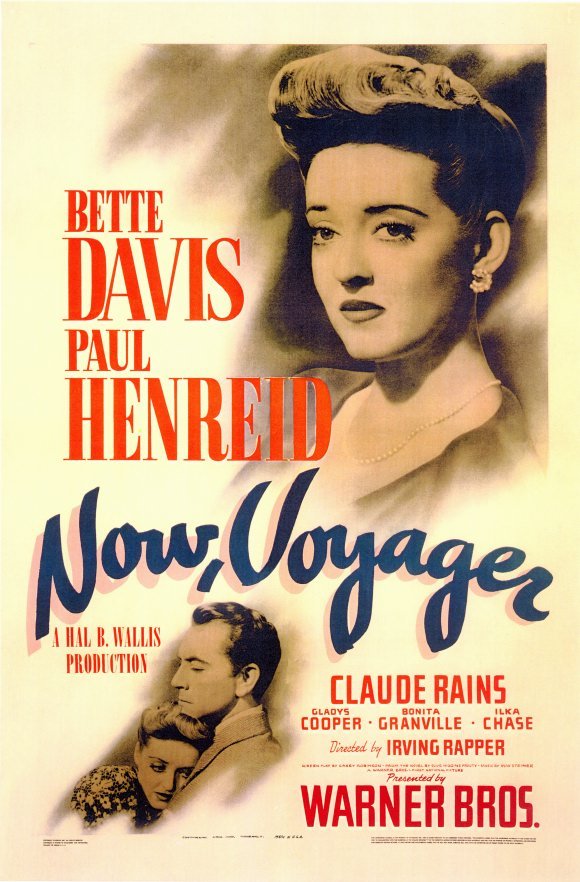
Now Voyager appeared as part of the first wave of Hollywood's brief love affair with psychoanalysis, along with the likes of Hitchcock's Spellbound. This Freudian undertone sets it apart from standard Hollywood romantic melodramas, and the plot of a person forced to repress their true personality by an overbearing family figure seems to have struck a chord with gay film fans, amongst whom it has a fanbase to this day.
Bette Davis plays Boston heiress Charlotte Vale, a neurotic mess, largely due to her domineering mother (Gladys Cooper). After coming under the care of psychiatrist Dr. Jasquith (Claude Rains), Charlotte reinvents herself, going from frumpy introvert to glamorous woman about town. While on a cruise she meets and fall in love with a married man, Jerry (Paul Henreid). How will her mother react to the newly independent Charlotte? And can she ever find happiness with Jerry?
Drama is based around conflict and there is no shortage of that in this film, with Charlotte clashing with her mother, Charlotte's sister clashing with her mother, her mother clashing with Dr Jasquith, and Charlotte clashing with her feelings for Jerry. What makes the drama seem so fresh is the liberal attitude of Jasquith. He is more interested in Charlotte being happy, rather than have her conform to the stuffy morality of her background, or, indeed, of the wider society of the day, something that makes the appeal to the film's gay fanbase obvious. In addition, the script goes against the grain of contemporary romantic films by not going for an obvious path to true love, and seeming to accept that relationships are often complicated and happiness not always conventional.
There is plenty of fun to be had watching Bette Davis playing against type as the monobrowed dowdy Charlotte we see at the beginning of the film, emerging from her chrysalis into the polar opposite, glamorous, adventurous, and fun loving, not giving a damn for the stifling world of upper middle class Boston and the sense of duty and obligation that comes with it.
Film and psychoanalysis are the around the same age, as the Lumiere brothers started screenings of moving pictures in 1895, the same year that Freud published Studies in Hysteria, his first foray into what would become psychoanalysis. If anything it is the depiction of psychoanalysis itself, or at least the Hollywood version of Freud's work that dates Now Voyager. It portrays the mystery of the human psyche as being like a whodunnit, one that can be unravelled with the aid of the right clues, an approach that now seems a little unsophisticated.