Horror and Sci-Fi films old and new, weirdo trash, arthouse, forgotten gems, well loved classics, and I'm watching the original Dr Who from the beginning.
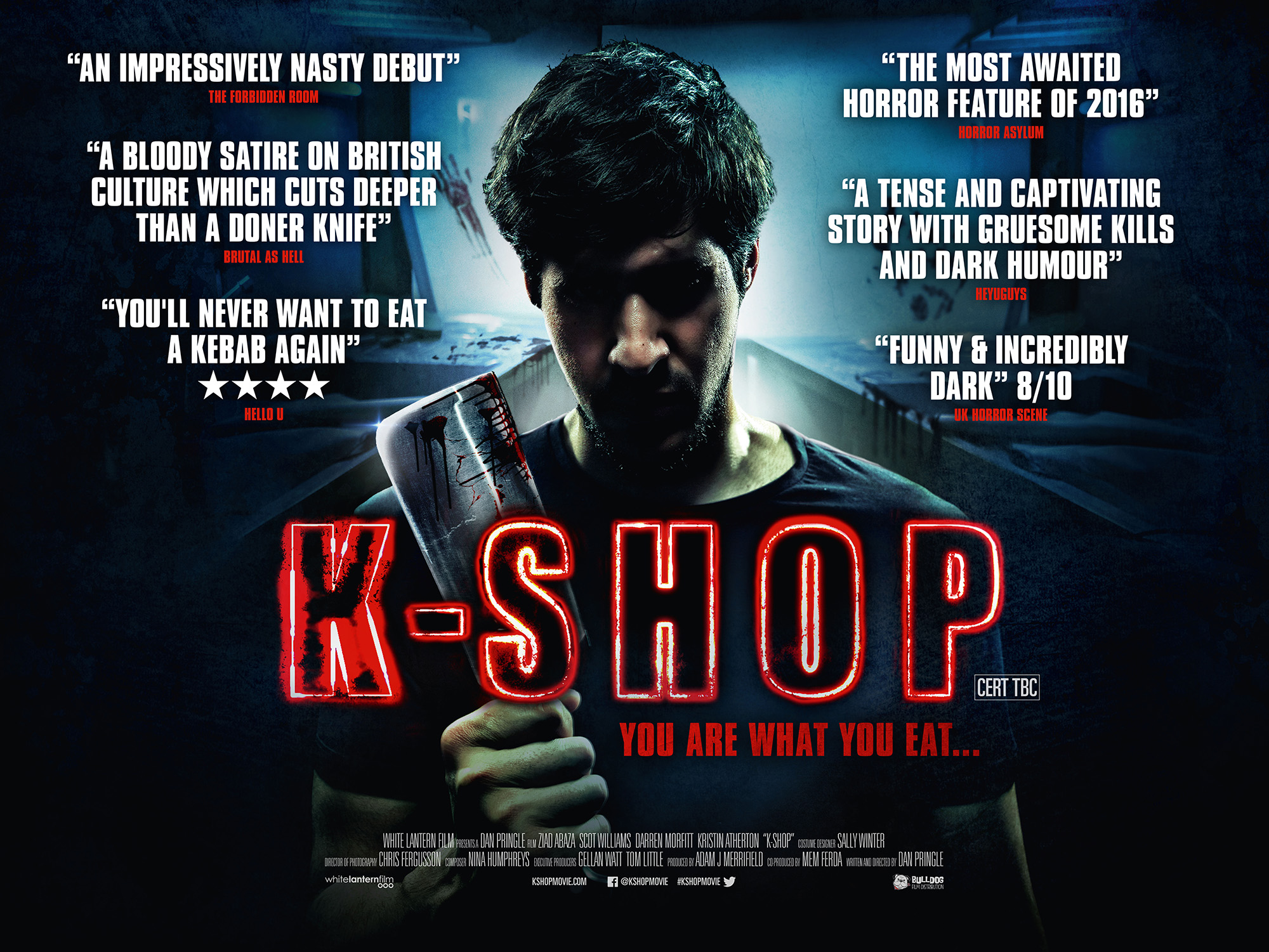
A modern take on the Sweeney Todd story, K-Shop has some
good ideas but these get buried in a script that fails to make the main character convincing.
Salah (Ziad Abaza) is a Turkish-British student, about to
graduate with a politics degree. With nothing left to do but fine tune his
dissertation, he comes to help his ailing father Zaki (Nayef Rashed) who runs a
late-night kebab place in an English seaside town. He is horrified at the way
the drunks abuse Zaki, abuse that turns tragic when Zaki dies at the hands of
one of them, leaving Salah in charge of the shop. From there, he launches a
one-man vigilante operation against his customers, and, being a businessman,
finds a way to dispose of the evidence and cut down on his overheads.
The film certainly paints a bleak view of England, a land of
binge drinking, vomiting, fancy dress stag nights, and sinister nightclub
owning reality TV stars. The biggest influence, consciously or not, seems to be
the Death Wish series and their subsequent rip-offs, where the filmmakers are
not subtle about telling us about whom we should be cheering for and who we
should be booing. The characterisation for the latter doesn't really go beyond
being us being shown somebody saying something awful, such as call centre
workers boasting about ripping off elderly vulnerable customers, or a drunk man
helping himself to food and referring to Zaki as Saddam, and the character arc
of Salah going from bookish student to cold blooded killer is not believable in
the slightest.
Nevertheless the anger of Salah, coupled with a dark
sense of humour and some outré gore compensate enough to make the film worth a watch for the misanthropic.
Over a decade after his nightmarish original director Tobe Hooper returned to make a sequel to The Texas Chainsaw Massacre. This time however, instead of a minuscule budget and a skeleton cast and crew, Hooper had the big bucks of Cannon films behind him, something that proved to be a mixed blessing.
When radio DJ Vanita 'Stretch' Brock accidentally captures on tape the Chainsaw murder of two obnoxious callers, she seeks out the help of former Texas Marshall 'Lefty' Enright (a post rehab Dennis Hopper). Enright is on a vigilante quest to track down the cannibal family from the first film, who he blames for the murder of his nephew.
This film is definitely a curate's egg. On one hand, the script has some interesting ideas about family and social status, and there is a great darkly comic turn from Jim Siedow as Drayton the cook (reprising his role from the first film), whose award-winning chilli has some rather unsavoury ingredients.
On the other hand, much of the film feels like an empty, noisy, overblown derivative 80s slasher, the comedy is strained and the horror isn't that scary. The first film was as ground-breaking stylistically as it was with subject matter, but here Hooper follows where he used to lead, although I suppose this may have been down to demands from the money men at Cannon films. It feels like there is a good movie buried in there somewhere and from what I've read Cannon cut out a lot of the class war satire.
My recent viewing was my first watch in about 20 years and back then it was still banned in the UK. So, the thrill of watching something legendary (with Dennis Hopper in) on a third generation dub of a Japanese laser-disc perhaps made me gloss over the flaws. Watching a digitally remastered copy on TV, the context is more mundane, and the flaws more obvious. The Texas Chainsaw Massacre 2 - Trailerby bulldog_mini
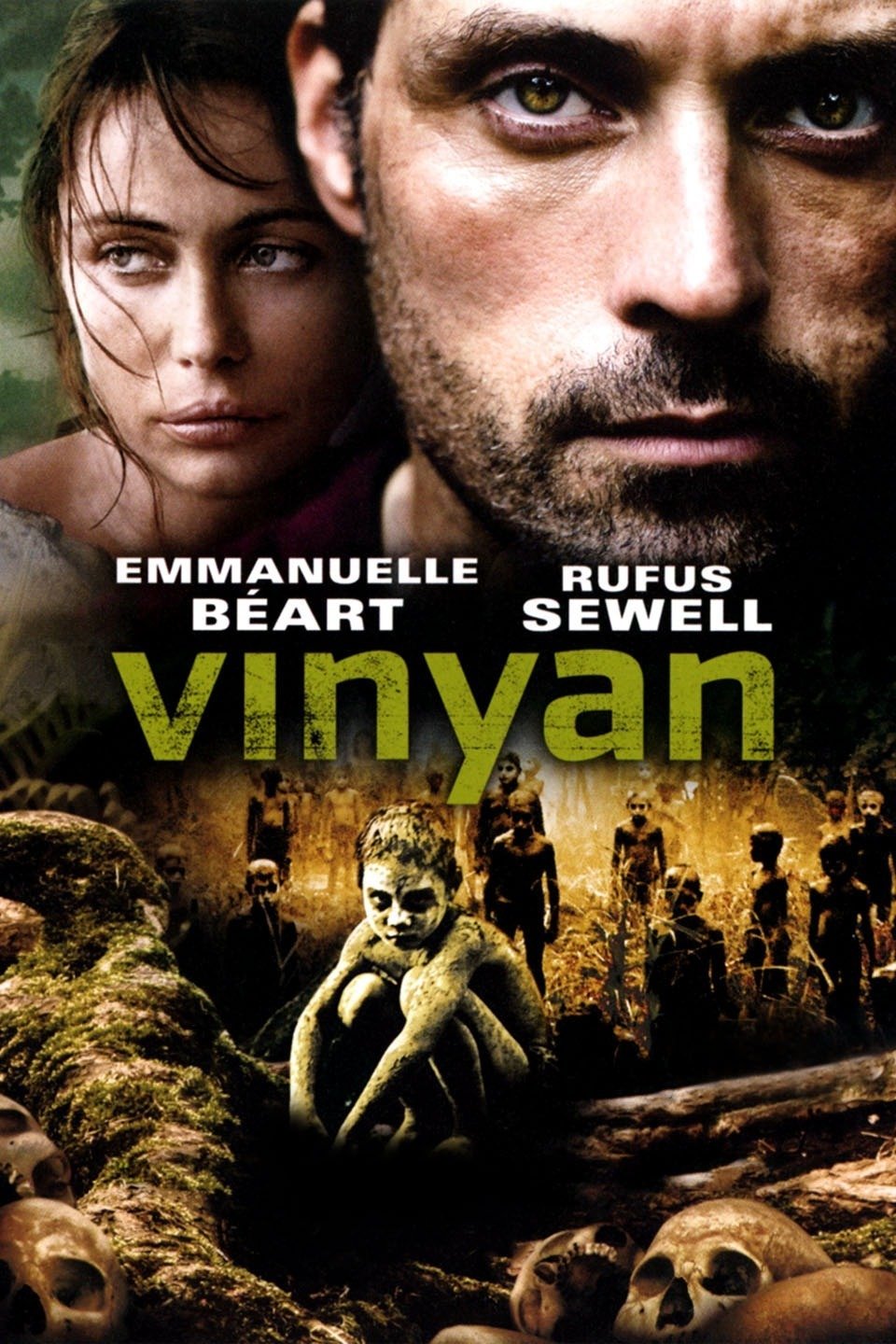
Vinyan is frustrating, with a harrowing and believable performance by Emmanuelle Beart wasted in a film where writer and director Fabrice du Welz hints at things but seems unable or unwilling to commit to them
The story centres around Paul (Rufus Sewell) and Janet Belhmer (Beart), a European couple living and working in Thailand, trying to get over the loss of their young son Joshua in a tsunami. After Janet becomes convinced Joshua is in a video of orphans in Burma, the pair head out there to investigate, along the way getting mixed up with con men, Triads, and other assorted local characters, all the time slipping further and further into madness.
Beart gives an intense performance, very convincing as a woman suffering every parent’s worst nightmare and being unable to cope with the loss. The only real problem with this is that she starts as already disturbed and has nowhere to go with the character. Sewell just does his best to keep up, playing as a man watching his dream life turning into a nightmare.
As with his previous film, Calvaire, Fabrice du Welz is long on stylish visuals and short on strong gripping narrative that makes a lot of sense. From the opening sequence set underwater, with just a few bubbles going past the camera (foreshadowing the tragedy that strikes of Joshua), to the dingy neon lit underworld of Thai bars and clubs, to the menacing Burmese jungles, the film always looks great.
The problem lies with the script, which is all over the place. It hints at many things, but never properly develops any of them, and the lack of character development makes the denouement somewhat puzzling. The film's title refers to the belief that when someone's death is particularly horrible their spirit becomes lost and confused, and they become Vinyan. Obviously, we are meant to link this to the death of Joshua, but then nothing further happens with this idea.
The trailer for Vinyan may have led you to think that this is a straight horror film, and the subject matter and spooky atmosphere suggests Don't Look Now, although it has none of that film's emotional impact.
The jungle setting and gory scenes also hint at another horror connection, that of the gut munching likes of Cannibal Holocaust or more recent efforts like The Green Inferno. Like many of those, in Vinyan, there is very much an "us and them" feel, the civilised white people versus the savages, with the latter never being humanised, and nearly always being shown as a dangerous swarm of insects.
Ultimately Vinyan feels like a film that could have been either a haunting meditation on loss, a disturbing horror film or even just a simple gore fest, but the lack of focus means it is none of these. Vinyan - Bande-annonce (VOST)by Ecranlarge
The Green Inferno harks back to the Italian cannibal films of the 1970s but lacks the truly disturbing edge of the likes of Cannibal Holocaust, as well as their grimy underground feel. In addition the misjudged tone and annoying characters blunt any satirical edge.
Justine (Lorenza Izzo) is a college student and daughter of a UN lawyer. After going to a lecture on female genital mutilation, and meeting hunky rabble-rouser Alejandro, she agrees to sign up his protest trip to take a gang of do-gooders to halt a logging company and their paramilitary security in the Amazon rainforest. It looks like their protest is a success, but after their plane crashes on the return trip, the protesters soon realise that the people they are trying to save would rather have them for dinner.
To his credit, Roth has made a mostly well-structured film in terms of plot, and there are also some brilliant set pieces, not least the plane crash, which is every bit as stomach churning as any gut munching scene.
While the most of the characters exist in order to be bumped off, Roth takes time introduce some tension in the group, particularly through Justine, who finds to her disgust that the crusaders are happy to put her life at risk without asking, banking on her daddy's reputation to avoid her getting killed.
The film also brings the cannibal genre into the twenty first century. For a start, the idea of Westerners flying into a foreign country uninvited with good aims, only to have the natives turn on them still seems topical. The narcissistic campaigners seem as obsessed with getting their work noticed on the internet or planning their next tattoo as with any good they are doing. However Roth seems to lack any ideas as to where to go beyond this, and the constant sneering at the mostly unlikeable characters becomes tiresome, not helped by misjudged scenes about drugs and diarrhoea.
The lush photography is wonderful and is a throwback to more highbrow 70s films such as Herzog's Aguirre, Wrath of God. The cannibals, while portrayed by a real South American tribe, are never shown to be more than obviously outrageous caricatures so I found it hard to get as offended I might have done if I thought Roth was trying to portray anything realistic. But for all the nods to more lowbrow Grindhouse cinema of the same decade like this, The Green Inferno lacks two important elements from these films.
Firstly is unsimulated animal cruelty, something that makes the likes of Cannibal Holocaust uncomfortable viewing even in these jaded times. Incidentally, it is something that Holocaust director Ruggero Deodato seems to regret, having recently completed a special cut of the film that eliminates nearly all of the animal footage, while keeping, it should be noted, nearly all of the human cruelty. Similarly, the focus in The Green Inferno is on the grim and gory fates that befall the cast.
The second hinges on the viewing experience itself. I watched The Green Inferno on a plasma screen TV from a DVD I had bought in a supermarket. I first saw Cannibal Holocaust on a grimy, wonky, third generation dubbed VHS (on a double bill with Cannibal Ferox), borrowed from someone at school who had bought it from an ad in the back of a horror movie mag, with the sound turned down so my parents wouldn’t hear it. Every aspect of this reinforced the feeling that I was watching something truly underground and transgressive, (which also distracted from the problems with the film). Without being able to capture these elements The Green Inferno becomes ultimately, just another horror film.
Although it might be tempting to lump Cannibal Apocalypse in with similar gut munching genre films from the 70s and 80s it is both different from and much more entertaining than many of these. Director Antonio Margheriti keeps the action moving but also focusses as much on character as on grue, John Saxon creates a sympathetic lead, and the premise has some surprising symbolism about post traumatic stress disorder. A platoon of US soldiers lands in a Vietnamese village on a search and rescue mission led by Captain Norman Hopper (John Saxon). Hopper finds two POWs trapped in a pit, munching on the flesh of a villager, and as he reaches out to rescue them, one (the distractingly named Charles Bukowski, played by genre legend John Morghen) bites him. Cut to a few years later, back in the US and Bukowski is released from a psychiatric hospital, but he still has a taste for human flesh, a craving caused by a virus contracted in Vietnam. Hopper starts to realise that Bukowski may have passed the virus on to him - and to anyone else that he can get his teeth into. Margheriti does not skimp on the gore, such as the football sized hole that a shotgun blast leaves in somebody's guts, and it will not be too much of a suprise to hear that this film made the British Government's infamous Video Nasty list in the 1980s. Nevrtheless, Cannibal Apocalypse has several elements that lift the film above the more grim, cheerless and tiresome horror efforts that were also being made at the time. Firstly the script is both straightforward and fast moving, and gives John Saxon the opportunity to build a likeable and sympathetic leading character, an every-man thrust into a bizarre situation that gradually slips out of his control. The polar opposite of Hopper is his former comrade-in-arms Bukowski. He is brilliantly played by Morghen, an actor who seems here as in the likes of Cannibal Ferox and House on the Edge of the Park, to be typecast as some of the most grubby and unwholesome characters in cinema history. The most fascinating part of the film is the symbolism of the virus that causes them to turn to flesheating. Unlike the zombies or cannibals of other contemporary horror films, these characters do not become mindless killers, but, although slaves to their new appetites, remain seemingly sentient, more like high functioning addicts. Another interpretation stems from where the characters originally contracted the virus, their wartime experiences. This, like Post-traumatic stress disorder, is something that they bring back to civilian life, and, like PTSD, can sit dormant for years, but if untreated, eventually begins to have a detrimental effect on the veterans, as well as their families and friends, and, eventually, their fellow citizens. One accusation that could be placed at both Vietnam and Cannibal genre films is racism. The North American or European protagonists are, even if cruel and degenerate, still the "normal" people that the audience relate to, and the Vietnamese / Cannibals are savage, exotic, mysterious and "foreign", even if the action takes place for in their own country. Cannibal Apocalypse overcomes these by placing most of the action in urban America, and making the Americans the cannibals. The flesheating is never implied to be a part of Vietnamese culture, just something that the war has driven the Americans to acting out. Of course there are some of the usual things present in low budget exploitation filmmaking, such as clunky dialogue, underwritten supporting characters and badly matched stock footage, but none of this detracts from a distinctive, and unsettling slice of 80s horror.
A favourite trick
of horror films is to take something that should be familiar and comforting to
a character, such as family, and subvert or corrupt it. In Parents, we see a
little boy begin to suspect that his oh-so-perfect Mom and Dad have some very
nasty secrets in the refrigerator, and director Bob Balaban has created a film
that is a slow burner, building an atmosphere of ambiguity and dread,
punctuated with moments of jet black comedy. The ending does slightly spoil all
the hard work, but, despite this, Parents is still creepy, funny, and highly
memorable.
Young Michael Laemle is anxious enough, being an only child who has just moved
to a new town and a new school. Now, he is getting nervous about dinner,
because the family are having leftovers again. In fact, he is always having
leftovers - but never what they were left over from.
The opening credit sequence sets us up perfectly for what is to come, in both
style and content. The first shot is of Michael's head sliding into view
accompanied by menacing rumbling and clanking sounds. This then cuts into a
montage of the family driving to their new house, waving and smiling at their
new neighbours who wave and smile back, the parents dancing around the living
room, Mom making a cake and Dad practising his golf swing, all to the upbeat
strains of a Rumba song.
Stylistically, Parents owes much to David Lynch, especially Eraserhead, with
its black-and-white moodiness, periods of silence, and ominous background sound
effects, and Blue Velvet, with its depiction of a bright happy suburban town
hiding dark disturbing secrets.
Throughout the film, we are constantly shown this contrast of opposites in two
ways. Firstly, the repeated cutting from Michael's disturbing nightmares
(usually involving gallons of blood and body parts), to the garish cheeriness
of home life; secondly, by taking the sort of events that should be a normal
part of growing up for a child, such as Dad carrying his son to bed, or sitting
down to eat dinner, and draining them of any pleasant overtones. Instead, we
get long awkward silences, more of the aforementioned rumbling sound effects,
and the fact that Dad (played by Randy Quaid), with his growing, barely
disguised contempt for his quiet, imaginative and non-meat-eating son, cannot
seem to say anything to Michael without it sounding like a threat. Quaid
deserves a special mention, as he is completely convincing as both a Ward
Cleaver style dad, and the sort of guy who WILL rip your head off and bury your
corpse if you disobey him, and he switches effortlessly between the two.
The script takes
a dark approach to children and the family, with nods to the theories of
Sigmund Freud. The first of these is explored in the infamous theory of the
Oedipal Complex, where the son wants to usurp the father by murdering him. The
tensions between Michael and his Dad are what drive the plot, but there is a
specific allusion to Oedipus in one scene where Michael is seen aiming and
firing an imaginary gun at his dad. The theory also refers to the son wanting
to consummate a sexual relationship with the mother, and although this is not
explicitly referred to, the relationship between Michael and Mom is much closer
than with Dad, and much more obviously affectionate.
The second Freud reference is to what is known as the primal fantasy, where a
child is left traumatized by seeing or hearing his or her parents having sex,
which is what happens to Michael in one scene. This is given a twist here by
the hint that Mom and Dad might have been introducing something from the
kitchen into the bedroom - is that blood they are rolling around in? There is
certainly something red smeared on mom's lips - but is it just lipstick?
This scene is a perfect example of the ambiguity that makes Parents so
intriguing. Although Dad is undeniably sinister and unpleasant on the surface,
there is nothing, at least to start with, that could not be explained as the
hallucinations of a boy with an over-active imagination and bad dreams.
Incidentally, the repeated references to dreams may be another nod to Freud,
who used them as a therapeutic tool, and whose book on the subject is one of
the seminal works of psychoanalysis.
The ambiguity starts to lessen when we are introduced to the Michael's school
counsellor, who is convinced that his fears over his parents are all in his
head, but on paying a visit to the family home, finds, in the worst possible
way, that this may not be the case after all.
It is at this point that the film switches to more standard slasher film
scenes, with Dad finally losing his temper and stalking Michael around the
house, before coming to a grisly end underneath a wine rack.
The final scene sees Michael trying to put recent events behind him, and start
a new life being brought up by his grandparents. However, any notion that he is
now safe and sound from the mystery meat he was subjected too by his parents
soon evaporates, with the appearance of a bedtime snack consisting of - the
dreaded leftovers. This twist ending suggests that his parent’s culinary habits
are inherited, and Michael may himself be doomed to repeat the cycle of
cannibalism. This could be interpreted as the final allusion to Freud, who wrote
of the concept of "Repetition Compulsion", where people ceaselessly
repeat distressing patterns of behaviour from earlier life.