Sunday, 23 March 2014

Celebrity (1998)


With the rate at which he churns them out, it is no surprise that the back catalogue of Woody Allen is going to be a mix of hits and misses. Although I find more hits than some critics or moviegoers, Celebrity is not one of them, lumbered as it is with a rambling and largely dull screenplay, unlikeable characters, and an annoying Woody Allen impersonation from Kenneth Branagh.
 
Lee (played by Branagh) is a failed novelist turned travel writer and celebrity journalist, going through a midlife crisis and a divorce from his wife, Robin (Judy Davis), a neurotic and insecure English teacher. While a chance encounter at a plastic surgery clinic sets Robin on the path to a new life and a new career as a TV presenter, Lee sees his relationships flounder, along with his dreams of getting his screenplay filmed.

 
I am not of the opinion that Allen has lost it, as recent efforts like Blue Jasmine have shown that with the right premise, and some time spent constructing the script he can still more than cut it. However, Celebrity feels like he got a bunch of ideas that had been lying around, and tried to string them together in one rushed draft. For a film packed with neurotics the finished product feels lifeless. It is hard to give a damn about the characters, and their world is too insular, with nothing about them, either on the surface or in broader characteristics or situations that gives us a way in with anything to sympathise or identify with.

As any Allen aficionado knows, a film of his that does not star him will often have one character doing an impersonation of “The Woody Allen Character”, and here we have Kenneth Branagh doing his attempt. Unfortunately, while he captures the surface traits, the tics, the stuttering, the hand gestures, he never manages to get beyond that and turn Lee into a believable character.

Judy Davis does a better job of bringing Robin to life, imbuing her with some likeable vulnerability. The events that happen to her may seem improbable, but in a way, that is kind of the point, in the context of the character arc.

The film is not totally without merit, and, aside from some good quality one-liners ("What's your next project?" "Birth of a Nation, an all-black version") there is one genuinely hilarious sequence, with Lee inadvertently taking a trip to Atlantic City with a vain, violent movie star (a cameo from Leonardo di Caprio) and trying to discuss rewrites to his script with in the middle of a hooker and drugs orgy.
 
That alone might make be enough to make it worth watching for Woody Allen completists, but anyone else may struggle to find a reason.


Saturday, 15 March 2014

Konga (1961)


A deliriously mess of a film, Konga represents an all too rare UK based attempt at a giant monster film. With a great performance from Michael Gough, some endearingly awful special effects, and a script that mixes a range of influences from King Kong to Poe, we get a film that is ridiculous but never less than entertaining.

After disappearing for a year in Africa, Dr Charles Decker comes back with a baby chimp and some crazy ideas about a way of growing plants and animals to an enormous size. As he slowly loses his mind he decides to use his discoveries in order to get rid of his enemies – but has he created something way beyond his control?

Despite the British setting and cast, Konga was actually the brainchild of American producer Herman Cohen, the man behind 50s horror hits such as I Was a Teenage Werewolf, I Was a Teenage Frankenstein, and How to Make a Monster. Cohen moved to the UK to make the delightfully lurid thriller Horrors of the Black Museum, which also starred Michael Gough as an arrogant sadist with a taste for murder, albeit one who works in journalism rather than science, and the film proved to be a big success. When asked to make a follow up, Cohen opted to move into more fantasy rooted territory.

Although King Kong is the most obvious influence, judging from the posters at least, the only element borrowed for Konga is the presence of a giant ape, and that does not show until the final act. A more obvious source is the Edgar Allen Poe story “Murders in the Rue Morgue”, from which it borrows the idea of a primate being trained to carry out the murderous wishes of its owner. However, an interesting twist on this comes when Decker's assistant Margaret also trains Konga to bump off what she sees as her rivals for the Doctor's affections. This makes Konga become something akin to the "Monsters from the Id" from Forbidden Planet.

Gough chews the scenery from the outset, but also gives Decker an oily, sinister aspect that stops his performance becoming grating. Make no mistake, he is definitely evil - he shoots his pet cat dead "in case" it interferes with his experiments - but Gough never resorts to foaming at the mouth theatrics, instead playing Decker as cool and sometimes charming, which would make for a chilling character if the situations were not so ridiculous and the dialogue not so portentous.

With such a dazzling lead, the other characters in the film are inevitably going to get overshadowed. However, Decker's assistant Margaret is fairly memorable, utterly devoted to him, turning a blind eye to his crimes, and only getting on the moral high ground when she learns he has been eyeing up one of his students. And, this being set "Between the end of the Chatterley ban, and The Beatles' first LP...", Dr Decker's students are hilariously dated, with lots of sensible sweaters and Trad Jazz.

However, just as entertaining as the star and the script are the special effects, especially the Gorilla costume. Despite starting (and ending) the film as a chimpanzee, one of the side effects of Dr Decker's growth serum is to, once he reaches a certain size, turn Konga into a gorilla. Herman Cohen had previously worked on "Bela Lugosi Meets a Brooklyn Gorilla", and while I am not sure if it the same costume (or the same man in the costume), it is certainly a similar quality. Elsewhere, we get some ridiculous man eating rubber plants, straight out of Little Shop of Horrors, and when Margaret gets picked up and thrown around by Konga, it is very obviously a miniature doll. 


Son of Kong (1933)


Released just months after King Kong, and using much of the same cast and crew, Son of Kong is no match for the original. Despite some unique touches, and a likeable title character, the rushed ending and talky script make this sequel sometimes exciting, but, too often, dull.

The film opens with Carl Denham, the man who bought King Kong to New York, penniless and up to his neck in lawsuits from the death and destruction that caused by Kong. Jumping at the chance to get out of the country, he takes a job on a cargo ship, where he meets Nils Helstrom, the man who sold him the map to Kong Island in the first place. Helstrom is now full of tales of buried treasure on the island and says he wants to go back there - but is something much dangerous waiting for them instead?

The screenplay feels poorly thought out and put together in a rushed manner, which, given how quickly the film was released after the original, surely must have been the case. It assumes you have some knowledge of the first film, but given how fresh it would have been in the minds of the movie going public (and the extent to which the character of King Kong is still part of popular culture) this is unlikely to be a problem.  The first half is relentlessly talky, with dull dialogue delivered in a wooden manner, and while things pick up slightly when the characters reach Kong Island, there is still no momentum to the search for the treasure, a wasted opportunity.

The film only really comes to life during the action sequences, particularly the fights between Kong Junior and the assorted beasts, such as giant bears and dinosaurs that inhabit the island. While the special effects look dated, and not as carefully constructed as in the first film, presumably due to lack of time and money they are still elaborate and well done. Kong Junior comes across as more than just a roaring beast, being quite charming at times, and even a bit goofy and childlike, at one point doing a shrug of his shoulders to camera.

As is common in many of the films of the time, the attitudes to race look very dated. However, both the “Ooga Booga” tribesmen that the party encounter on the island, some of who look obviously blacked up, and Charlie the Chinese cook and his broken English are both too silly to cause any serious offence, being more insensitive than intentionally offensive.

In the closing few minutes, with an earthquake appearing from out of nowhere to destroy the island, we finally see the characters in some real peril, with a chance they might not all get out alive. Unfortunately, the rushed nature of the film means that we have not had time to get to know any of them, and when one does make the ultimate sacrifice, there is little emotional impact.


Sunday, 9 March 2014

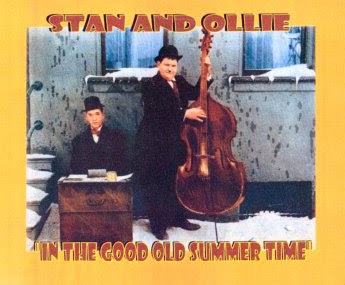
Below Zero (1930)


With Laurel and Hardy, the two main characters stay the same, but their circumstances and situations vary from film to film. Sometimes they have wives, sometimes they have jobs, and sometimes they have houses. In Below Zero, they have none of these, only a harmonium, a double bass, and their rather limited musical ability, with which to try to survive a harsh winter.

The humour comes from familiar sources, slapstick, misunderstandings (playing music outside a deaf centre is never going to be a success), bad luck and petty fighting with each other and the rest of the world, which invariably leads to destruction of property. The duo’s instruments do not survive the first half of the film, as they eventually push a woman too far. As in other Laurel and Hardy films such as Big Business, the destruction almost becomes a stylised ritual, and the duo make no attempt to stop it, seemingly almost resigned to their fate.

The direction is straightforward, largely consisting of pointing the camera at the stars and fixing it there. However, there is one scene, involving a bird laying an egg that uses editing to tell the joke by implying through the juxtaposition of shots, a sign that the language of film was getting more sophisticated as people began to explore the unique possibilities of the medium.

Below Zero also contains two elements of Laurel and Hardy that can sometimes be overlooked. First is the touching bond of friendship between the two, which is always there even if it is often buried beneath the bickering. When, after being beaten up and thrown out of a restaurant, Olly is calling out for Stan, he seems genuinely concerned that his partner is missing.

The second is the bizarre, cartoonish climax that sees Stan end up with a grotesquely distended belly after drinking the entire contents of the huge barrel of water in which he has been dumped, the sort of gag I would expect to find in a Tom and Jerry or Looney Tunes cartoon. However, such bizarre surrealism is something that crops up from time to time in their films, such as the ending of Dirty Work, where a mad scientist and his anti-aging serum turn Olly into a chimp.  

Below Zero was one of several films reshot in foreign languages, in this case Spanish, in order to cash in the popularity they had achieved as silent film stars in Europe. Instead of dubbing the film it was completely remade, with Stan and Olly saying their lines in broken Spanish (and Stan struggling to get past his Lancashire accent), and most of the other actors with speaking parts replaced by people who speak the language.

For financial reasons, these versions needed to be slightly longer than the usual 20 minutes, leading to extra or reworked scenes. These range from the opening scene introducing the policeman, and the back-story about his wallet and money that the duo inadvertently acquire, to extended version of the scene with a blind man, that lacks the short simplicity (and humour) of the English version. These feel exactly like the padding that they are, and interesting though it is to watch, this version adds nothing to the original, which favours quality over quantity.


Wednesday, 5 March 2014

Body Melt (1993)


Sharing the same mentality (and hailing from the same part of the world) as early Peter Jackson films like Bad Taste and Brain Dead, Body Melt has some good ideas, but is derailed by an unfocussed script. What is left is good looking, and sporadically extreme and gory, but ultimately, slightly too dull to be a classic.

Residents in the quiet suburban Australian street of Pebbles Court have started getting free vitamin pills in the mail, pills designed to make them into the ultimate healthy human. Unfortunately they also seem to have unexpected side effects such as hallucinations and grotesque mutations. With the bodies piling up, can police find the source - and does it have anything to do with the kindly local doctor with a mysterious past?

Body Melt is the brainchild of director Phillip Brophy and he certainly gives the film a strong, consistent visual style, particularly in the scenes set in Pebbles court, with the houses and people alike shown in bright, almost nauseatingly lurid colours, reminiscent of films like Parents or Blue Velvet.

However, as co-writer and composer, he also has to shoulder some of the blame for the film's two major shortcomings, the rambling script, and weak soundtrack. After a great opening that sets up plenty of intrigue around the premise (as well as giving us a car crash victim with tentacles crawling out of his neck wounds) things soon taper off, and the energy dissipates as the script cuts between the different characters from the street, in long and sometimes seemingly pointless scenes. The credits say the script is based on a series of short stories by Brophy, and that might go some way to explaining why none of the plot lines really gel together,

The tinny electronic soundtrack is also largely down to Brophy, and adds nothing to the power or mood of any of the scenes, as well as being monotonous enough to quickly become tiresome.

Thankfully, there is still enough to enjoy making it worth a look. The comic book feel of the film invites some fun overacting, and the cast are more than up to the challenge. Best of the bunch is Ian Smith as the town doctor, and British viewers may remember him as Harold Bishop from the Aussie TV soap Neighbours.

Although some of the ideas, such as mutant cannibals and melting bodies, are obvious nods to films such as Street Trash, or The Texas Chainsaw Massacre, placing them in new contexts such as housing estates or the Australian outback gives them a fresh feel that avoids them feeling stolen.

There are some wholly original touches too, such as the musclebound hunks that make up the staff of the Health farm, and all speak with squeaky high-pitched voices, and the scene involving a pregnant woman and her husband being attacked by a mutant placenta is, unsurprisingly, done in wonderfully poor taste, and injects some much needed, and all too rare energy into the film.