Horror and Sci-Fi films old and new, weirdo trash, arthouse, forgotten gems, well loved classics, and I'm watching the original Dr Who from the beginning.
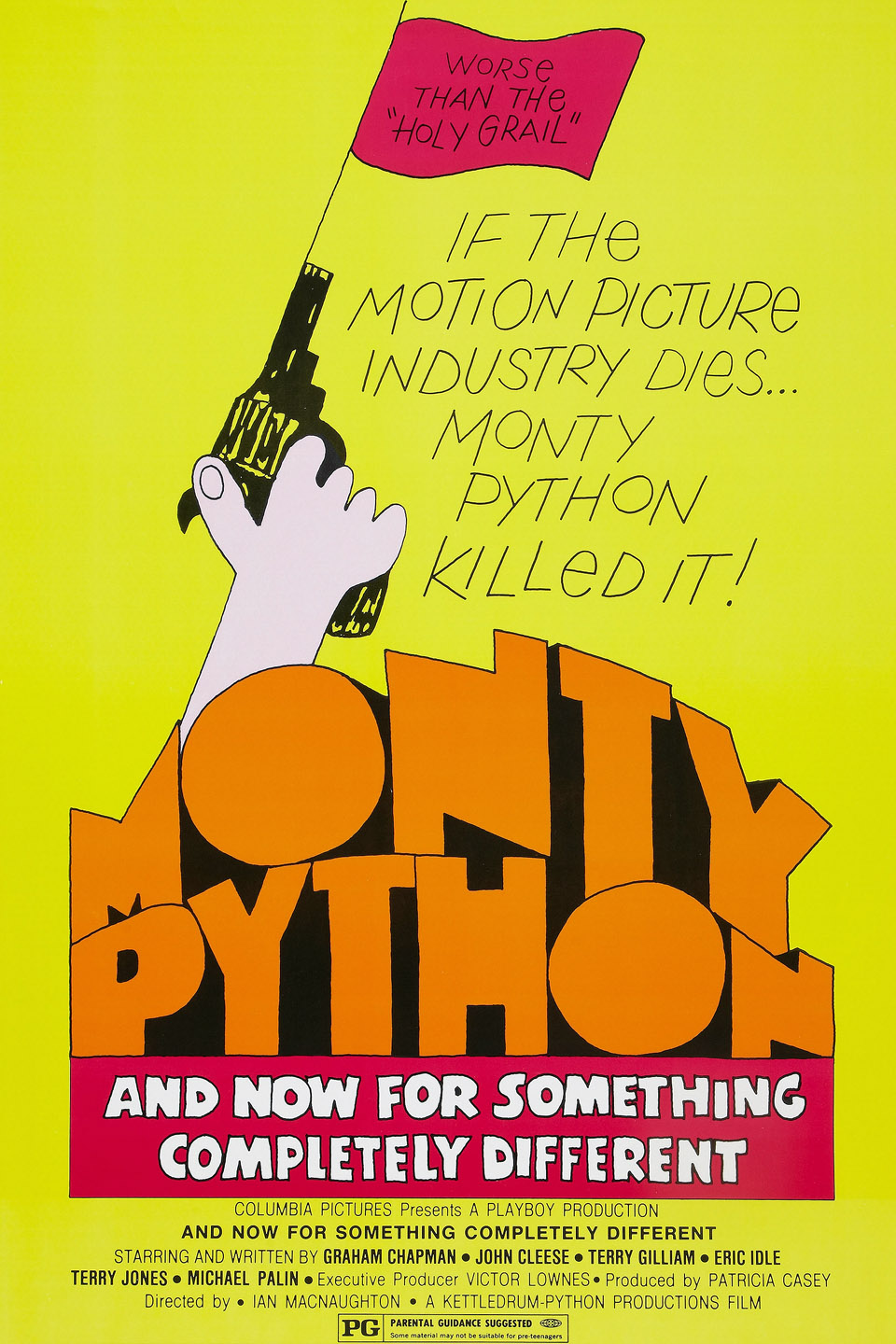
A rather ironic title considering that this is simply a big screen rehash of some of the best and best known sketches from the TV incarnation of Monty Python's Flying Circus. The end result is sometimes frustrating but it is saved by the quality of a lot of the material.
As it is simply a Greatest Hits, there is no plot or unifying theme to speak of, although, as on the TV show, sketches sometimes run into each other, and there are occasional running gags, and Terry Gilliam's jaw-dropping animations.
The film is directed in a workmanlike fashion by Ian McNaughton, who was behind the camera for most the TV show. No attempt is made to expand on the writing or shooting of the original material, although this may have been down to the minuscule budget and schedule. The whole thing was financed by Playboy as a way to try and break Monty Python in the US, but with less money for the whole thing than Heff spends in a week on pipe cleaners. In addition, and it may be a subjective thing on my part, but some of the sketches felt a little flat without the laughter track that I was used to hearing on the TV show.
A nice introduction to Monty Python for the uninitiated, but no match for the later efforts such as Holy Grail and Life of Brian, where, unlike here, the team would have the chance to engage with and take advantage of the medium.
A trip back to a time when fantasy worlds were painstakingly created one frame at a time, Ray Harryhausen – Special Effects Titan is an affectionate look at the career of the pioneer of stop motion animation, with words of praise from some high profile fans.
The story starts with his childhood, where Harryhausen became besotted with the original King Kong, and friendly with the creature’s creator Willis O’Brien, who became his mentor. We then get a journey through his sci-fi themed work such as Earth vs the Flying Saucers and First Men on the Moon, to the more mythology and fantasy based work like Jason and the Argonauts.
All this is interspersed with talking head clips from the man himself, who comes across as charming, articulate and warm, and celebrity supporters such as Terry Gilliam, John Landis, Stephen Spielberg, James Cameron and Joe Dante, all of whom talk of the influence Harryhausen and his films had on their lives and careers (Interestingly they all have their own favourite of his work, all for different reasons). Rather than just being fanboy ramblings however, they all seem to agree on the key to what makes his work special, which is that beyond the technical skill and spectacle, Harryhausen breathes life and even emotion into his characters.
We also get some insight into his working process, such as how his father used his engineering skills to help with much of the early building work, and how Harryhausen would not just build models, but get involved in story and design work on a film, even when not credited.
Furthermore, there is a plug for the Ray Harryhausen Foundation, set up both to continue teaching his techniques and to preserve his vast archive of models, drawings and notes, work that continues today, following his death in 2013.
The relentlessly positive mood gets a bit cloying after a while, and I started to long for some tales of conflict, something to break up the tone, but overall this is an enjoyable look at one of the greats of cinema.